In food innovation, dried fruits do more than provide flavor and texture. They also play an important role in enhancing product value.
However, not all sweetness in dried fruits comes naturally from the fruit itself.
To balance acidity, improve taste, or enhance product stability, many dried fruits undergo sugar infusion or added sugar processing during production. Raisins, however, are among the few dried fruits whose sweetness mainly comes from the natural sugars concentrated from the fruit itself.
Natural Sweetness, From the Grapes Themselves
Grapes are naturally high in sugar. During ripening, they accumulate abundant glucose and fructose.
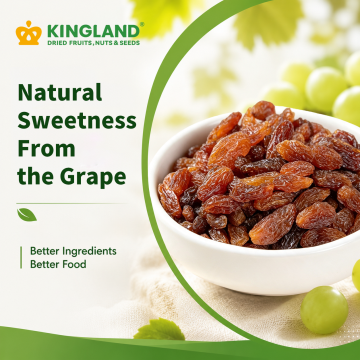
Through natural or controlled dehydration, water is removed while the natural sugars become concentrated, creating the rich sweetness that defines raisins. This sweetness comes from the fruit itself, rather than from added sugars during processing.
As a result, raisins retain the authentic flavor of grapes while delivering a naturally rich and consistent sweetness.
Why Do Many Dried Fruits Require Sugar Infusion?
Different fruits have different natural sugar-to-acid ratios.
For example, cranberries, cherries, and apricots naturally contain higher levels of acidity. After direct drying, their taste can be too tart, so commercial production often uses sugar infusion or added sugar processes to improve flavor, increase consumer acceptance, and optimize appearance and processing stability.
Of course, not all dried fruits require sugar infusion. Fruits such as dates and figs naturally contain high sugar levels and can also achieve sweetness through their own natural sugars.
However, thanks to their high natural sugar content and mature industrial processing capabilities, raisins have become one of the most widely used natural sweetening dried fruits in the global food industry.
What Does This Mean for Food Developers?
For food manufacturers, choosing a natural source of sweetness influences not only flavor, but also formulation possibilities.
Raisins can provide natural sweetness while reducing reliance on additional sweetening ingredients, creating more opportunities for product innovation.
Therefore, in applications such as cereals, energy bars, bakery products, snacks, dairy products, and frozen desserts, raisins are more than just a fruit ingredient. They are a functional food ingredient that delivers flavor, color, texture, and natural sweetness.
From Natural Advantage to Stable Application
Natural sweetness is only one part of the value of raisins.
For food manufacturers, what matters even more is consistent performance in every batch — including moisture control, cleanliness, microbiological safety, particle size consistency, and processing adaptability.
With over 20 years of expertise in ready-to-use food ingredients, KINGLAND is committed to transforming raisins from traditional agricultural products into functional food ingredients designed for modern food manufacturing needs.
We ensure that natural sweetness comes from the grapes themselves — and that this natural advantage can be delivered consistently in every finished product.
Natural sweetness, without unnecessary addition.
Stable performance, built through professional manufacturing.