In 2026, UK sales of protein- and fibre-positioned foods grew by 9.6% and 14.1%, respectively. At the same time, private-label products are moving beyond simply offering a lower price toward delivering clearer nutritional value at an accessible cost.
This is also changing how food ingredients are evaluated.
For purchasing and product development teams, the question is no longer simply whether a product contains fruit, nuts or seeds. It is how much protein, fibre and minerals a given inclusion level can genuinely contribute—and at what formulation cost.
Using 30 grams of each ingredient as a consistent basis for comparison:
Raisins
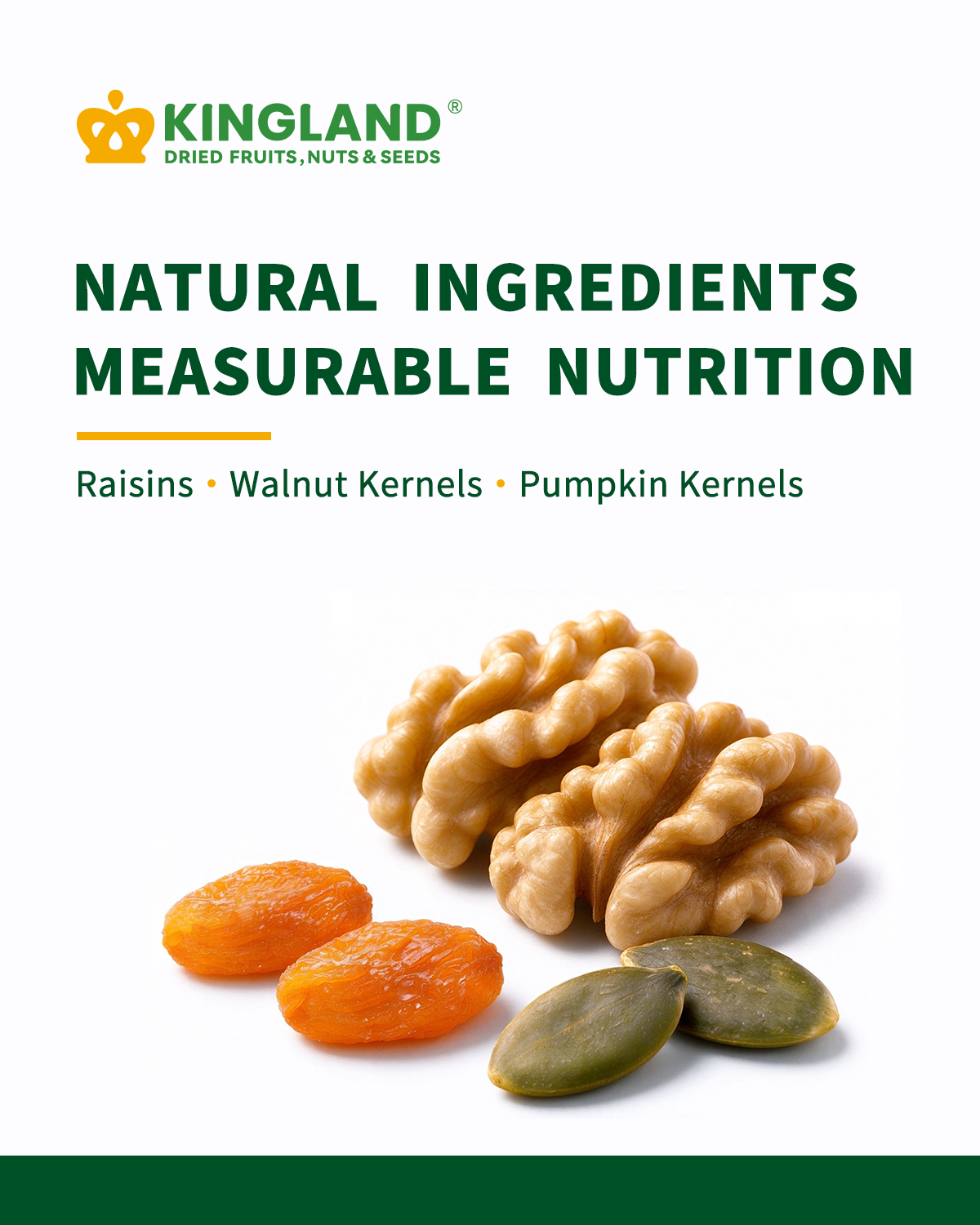
Thirty grams provide approximately 0.9–1.1 grams of dietary fibre and 261–281 milligrams of potassium. That is roughly 70% of the potassium found in an average banana, while also adding natural fruit sweetness and a chewy texture to cereals, bakery products and energy snacks.
Walnut kernels
Thirty grams provide approximately 4.4 grams of protein, 1.6 grams of dietary fibre and around 2.7 grams of plant-based omega-3 ALA. The protein contribution is equivalent to approximately 70% of that found in one large egg. Walnuts also add distinctive flavour, texture and visible product value.
Pumpkin kernels
Thirty grams provide approximately 9 grams of protein, 1.5 grams of dietary fibre and around 150 milligrams of magnesium. The protein contribution is comparable to approximately 1.4 large eggs, while the magnesium content is equivalent to that found in around 4.7 bananas.
These comparisons do not suggest that one food can replace another. They simply make the contribution of each nutrient easier to understand.
For food manufacturers, the more important question is: Beyond appearance and taste, how much measurable nutritional value does each ingredient add to the finished product?
For private-label development, ingredient value increasingly needsto be assessed across three dimensions: nutrition, sensory performance and formulation cost.
KINGLAND supplies raisins, walnut kernels and pumpkin kernels, supporting customers in evaluating specifications, inclusion levels, sensory performance and supply costs for different applications.
Any nutritional claim on the finished product should ultimately be based on the actual recipe, finished-product testing and applicable local regulations.