In multiple trend analyses for 2026, a clear direction is emerging: flavor no longer relies on a single, striking novelty, but is shifting toward extendable, combinable, and cross-category “base flavor assets.”
Within this context, the role of black raisins is being redefined.
Why Black Raisins Fit the Moment for Innovation
Black raisins are not a “new flavor,” nor do they require consumer re-education.
Their advantage lies in familiarity—yet they are far from monotonous.
From a flavor structure perspective, black raisins naturally provide three core values:
l A stable sweet backbone (from natural sugars, not added sweeteners)
l A soft but amplifiable fruit-acid background
l Concentrated flavor and deep color developed through drying
This allows them to be seamlessly applied across different product formats:
l In baked goods and desserts, they bring gentle indulgence
l In cereals, snacks, and formulated foods, they naturally support consumer-friendly narratives
For innovation teams, this ingredient offers a balance of efficiency and creativity, enabling cross-category use without rebuilding the formulation logic.
Three Practical Applications of Black Raisins
Enhancing overall flavor as a “supporting player”
Incorporated into fillings, sauces, spreads, or inclusions, black raisins provide a dark-fruit background and natural sweetness.
A stable vehicle for flavor contrasts
Black raisins pair well with:
l Nutty richness
l Aromatic layers from spices or herbs
l Savory bases (e.g., cereals, dairy, sauces)
Creating predictable “sweet + savory / fruit + aromatic” contrasts.
Balancing visual and sensory appeal
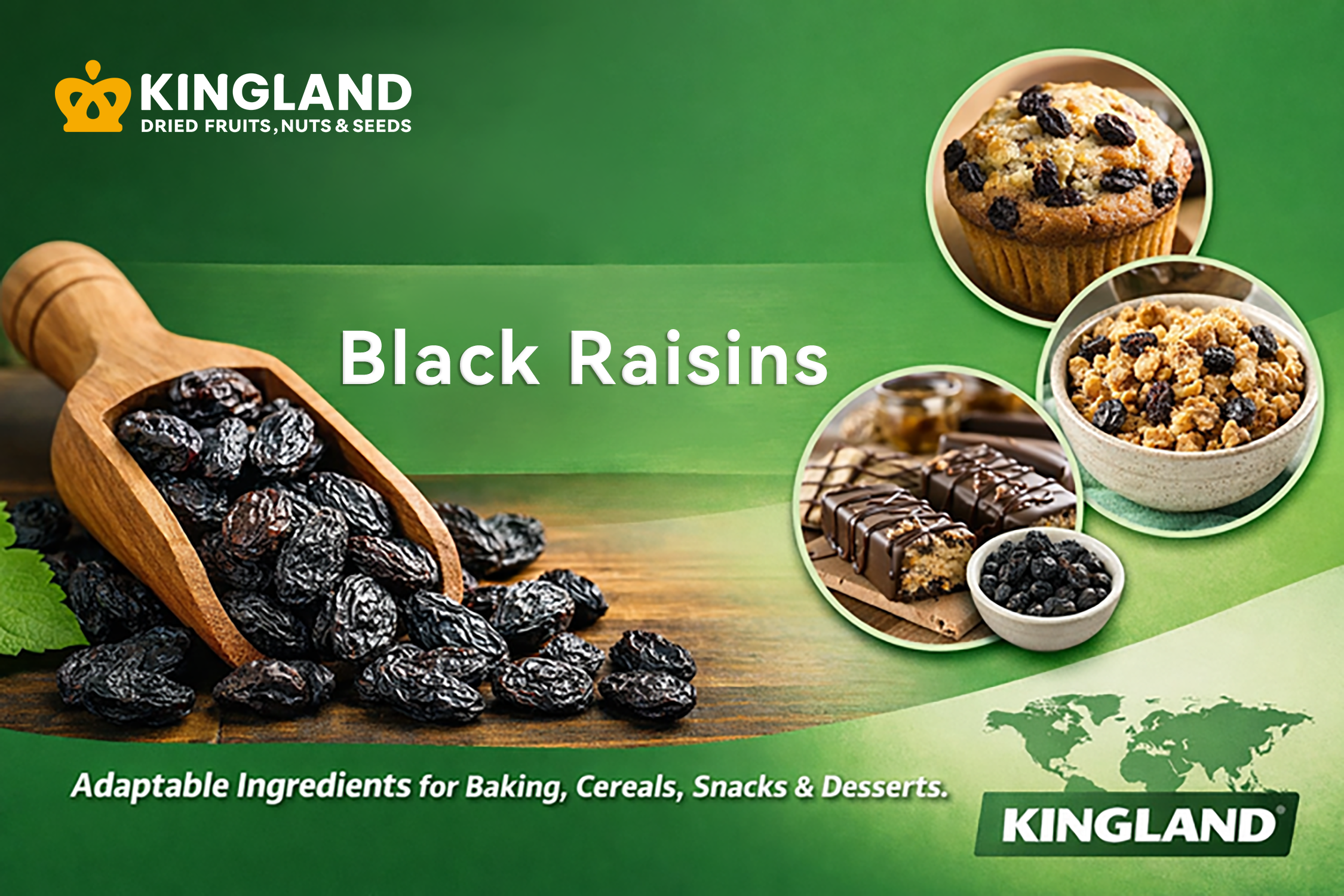
In products where color, aroma, and first impressions matter—such as desserts and cereal bars—the dark color of black raisins provides a natural, non-artificial visual cue.
Practical Implications for Procurement and R&D Teams
When an ingredient is used across multiple applications, the real challenge is no longer creativity, but execution:
l Consistent flavor throughout the year
l Controlled sensory variation between batches
l Cleanliness standards beyond regulatory requirements
l Reliable, year-round supply
l Shelf stability under high temperature, high humidity, and long storage cycles
This is where KINGLAND’s fully integrated supply chain delivers value.
From direct sourcing in core origins to automated BRCGS Grade A production facilities, we absorb raw material variability at the industrial level.
With cleanliness standards exceeding EU requirements, annual capacity of 80,000 MT, and proven shelf stability—no sugarized berry, no infestation, and strong resistance to heat and humidity—we keep uncertainty within our clean manufacturing system, not in our customers’ production lines.
2026 Innovation Rewards
Innovation in 2026 favors flavor systems that are natural at the core, structurally complex, yet immediately understandable by consumers.
Black raisins exemplify this trend:
• Unassuming yet highly versatile
• Familiar yet reliably stable
• Cross-category and reusable
For product teams, it means less formula overhaul, more incremental innovation;
For brands, this translates into higher cross-platform efficiency.